
⚡ Quick Bites (TL;DR)
Pro Tip: The September transition represents the most advantageous seasonal booking window across the Emirates. Properties actively recalibrate their yield management systems, opening up shadow suite inventory on premium distribution channels before the peak international winter rates lock in during October.
Strategic Warning: Booking entry-level standard rooms with the expectation of an automated multi-tier upgrade will fail during high-occupancy weekends. To guarantee an executive suite or presidential layout, reservations must target the highest standard category immediately beneath the suite tier within the digital room hierarchy.
Critical Alert: Municipal room fees, mandatory resort service charges, and regional hospitality taxes are legally non-negotiable across Dubai, Abu Dhabi, and Ras Al Khaimah. These statutory fees calculate against the gross pre-subsidized room valuation and are settled at physical departure.
The luxury hospitality landscape of the United Arab Emirates stands as an international benchmark for architectural ambition, bespoke guest service, and palatial indulgence. For residents and discerning regional travelers seeking respite, the staycation represents far more than a temporary escape; it is a meticulously planned lifestyle investment. However, navigating the upper echelons of the country’s hospitality ecosystem—specifically its celebrated world-class and ultra-exclusive properties—requires an intimate understanding of modern distribution technology. Securing elite accommodations across UAE 7-star luxury staycations during September 2026 is governed by complex mathematical yield management systems, digital loyalty tier mechanics, and seasonal inventory releases.
September functions as the pivotal transitional corridor in the Arabian Gulf. As the peak heat of mid-summer gradually yields to temperate coastal breezes and cooler desert evenings, luxury resorts prepare for the massive influx of fourth-quarter global tourism. During this exact thirty-day window, dynamic hotel pricing engines face a unique operational mandate: fill premium suites and sprawling private pool villas with high-value domestic travelers before international retail rates escalate. By deconstructing the underlying mechanics of major Online Travel Agency (OTA) algorithms and proprietary hotel reservation frameworks, experienced travelers can consistently unlock multi-category suite upgrades, complimentary culinary packages, and private leisure access across Dubai, Abu Dhabi, and Ras Al Khaimah.
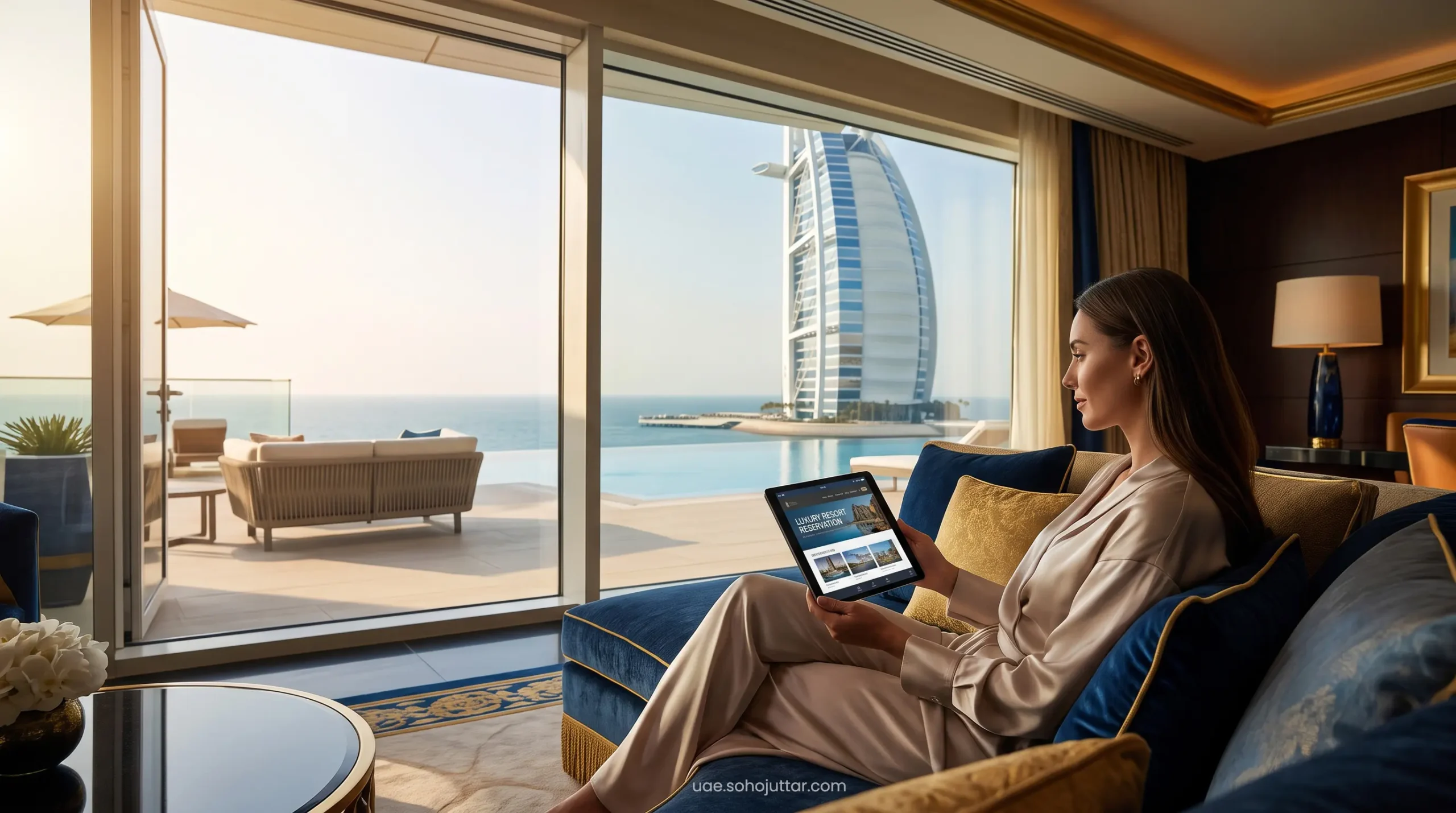
The Architecture of Modern Hospitality Algorithms
To successfully optimize luxury bookings, one must first comprehend the technological infrastructure connecting global distribution platforms to individual property management systems (PMS). Modern 7-star hotels do not manually set room rates; instead, automated revenue management systems continuously analyze booking velocity, regional flight arrival data, local event schedules, and historical occupancy curves. These engines automatically adjust room availability across dozens of consumer-facing channels every few seconds.
When high-end properties experience temporary gaps in premium suite occupancy during early autumn weekdays, their algorithms execute targeted inventory distributions. Rather than publicly discounting their flagship presidential suites or beachfront residences—which would erode the property’s brand equity and rate integrity—revenue managers route these assets into exclusive digital channels. These channels include high-tier loyalty databases, closed-user group programs, and geo-targeted domestic feeds. Recognizing where and when this shadow inventory appears allows travelers to secure opulent penthouses and expansive villas at unprecedented value.
The September Transitional Matrix: Climate Meets Occupancy
Seasonal weather patterns dictate the operational flow of luxury resorts throughout the Middle East. Understanding these environmental nuances provides a distinct tactical advantage when selecting destinations across the Emirates during September 2026:
- Dubai Coastal Enclaves: Early September brings lingering humidity along the coastline, prompting beachfront properties on Palm Jumeirah and Jumeirah Bay Island to heavily chill their private pool systems and emphasize indoor luxury amenities, private cabanas, and shaded atrium dining. By late September, outdoor terraces and rooftop infinity pools operate at peak popularity.
- Abu Dhabi Cultural & Palatial Sanctuaries: The capital’s grand palatial properties on Saadiyat Island and the Corniche feature expansive indoor square footage, marble gallerias, and climate-controlled private spa pavilions, making them exceptionally resilient to late-summer climate variations throughout the entire month.
- Ras Al Khaimah Desert & Mountain Escapes: Nestled within protected nature reserves and the foothills of the Hajar Mountains, luxury desert resorts experience evening temperature drops up to five degrees cooler than urban coastal centers, driving intense demand for secluded pool villas during early autumn weekends.
Because occupancy curves vary significantly between these three geographic zones, hotel revenue engines deploy contrasting distribution strategies. A luxury resort in Dubai might restrict suite availability on Friday evenings while offering substantial inclusions for midweek stays, whereas a secluded desert reserve in Ras Al Khaimah may show elevated demand across all weekend dates while maintaining accessible wholesale blocks from Monday through Thursday.
Mastering Tier-3 OTA Loyalty Systems
The most pervasive digital distribution engines operate sophisticated, multi-tiered loyalty architectures designed to reward high-frequency travelers. When applied to ultra-luxury properties in the Emirates, top-tier accounts bypass standardized consumer pricing entirely, accessing dedicated partner rates that contractually mandate value-added benefits.
Deploying a verified high-tier profile within premier booking platforms transforms the reservation process. At properties participating in specialized tier structures, the algorithm automatically enforces rate subsidies ranging from ten to twenty percent below publicly indexed retail prices. More importantly, these systems inject priority metadata flags into the hotel’s central reservation system. These flags instruct front-office management to prioritize the profile for physical room upgrades upon arrival, grant guaranteed early check-in windows, and provide daily gourmet breakfast spreads. Travelers looking to leverage these specific digital advantages should explore the precise protocols for Booking.com Genius Dubai suite allocations across iconic city landmarks.
💎 Mizanur’s VIP Booking Hack
When booking high-end suites for early September staycations, always execute your reservation exactly eighteen to twenty-one days prior to check-in during the late evening hours (between 10:00 PM and 1:00 AM GST). Revenue management algorithms perform automated system audits at midnight, releasing uncommitted wholesale room allocations back into the priority upgrade pool. By securing the highest standard room category during this nocturnal rebalancing window and immediately messaging the luxury guest relations desk through the app with your estimated arrival time, you dramatically increase the probability of capturing an executive suite upgrade before morning front-office assignments are finalized.
Direct Brand Loyalty vs. Third-Party Distribution
A central dilemma for seasoned luxury staycation seekers involves choosing between direct hotel loyalty programs and third-party digital agencies. Direct booking channels often promote proprietary point accrual and member recognition, yet third-party channels frequently command superior dynamic inventory during off-peak transitional periods.
Direct programs run by legacy international hospitality groups emphasize long-term lifetime value. Members holding elite status enjoy contractual guarantees such as dedicated club lounge access, enhanced room selection priority, and late 4:00 PM check-out privileges. Conversely, localized luxury brands in the UAE operate highly customized, experiential loyalty frameworks that prioritize on-property food, beverage, and wellness expenditures over pure night volume. Travelers evaluating where to concentrate their autumn staycation portfolio should examine the comprehensive breakdown between Jumeirah One vs Marriott Bonvoy to determine which ecosystem delivers superior room upgrades and personalized concierge service.

Unlocking Capital Prestige: Palatial Escapes in Abu Dhabi
The hospitality landscape of Abu Dhabi is characterized by palatial grandeur, extensive private beaches, and protected natural mangroves. Unlike the fast-paced vertical luxury of Dubai, the capital emphasizes expansive private suites, personalized butler services, and secluded oceanfront sanctuaries. For travelers seeking unmatched physical space and architectural serenity during September, Abu Dhabi’s premier resorts offer an extraordinary setting.
Securing elite accommodations in the capital requires targeting distribution channels that specialize in VIP property collections. When luxury resorts partner with specialized travel networks, they agree to provide tangible, high-value amenities to qualified members. These inclusions frequently take the form of substantial resort credits redeemable at award-winning culinary venues, complimentary private airport transfers, and bespoke wellness treatments. Those aiming to master the unique booking parameters and suite upgrade pathways of the capital should consult our dedicated guide to Expedia VIP Abu Dhabi palatial properties.
The Rise of Secluded Luxury: Private Pool Villas
Over the past several seasons, consumer preference among high-net-worth staycation seekers has shifted decisively toward standalone, secluded accommodations. Private pool villas offer absolute privacy, customized in-villa dining, and dedicated leisure facilities shielded from public view. Across the UAE, this category spans oceanfront villas on Saadiyat Island, overwater residences on the Palm Jumeirah, and secluded desert pool sanctuaries in Ras Al Khaimah.
Booking private pool villas requires an advanced understanding of wholesale inventory cycles. Because the total inventory of standalone pool villas at any given luxury property is inherently limited—often numbering fewer than thirty units—automated dynamic pricing models react aggressively to booking spikes. To secure these exclusive sanctuaries without encountering inflated peak rates, travelers must tap into specialized regional travel platforms and APAC wholesale blocks that pre-negotiate villa allocations months in advance. Detailed strategies for accessing these hidden rates are explored in our focused analysis of private pool villas UAE booking channels.

The Suite Upgrade Hierarchy: Anatomy of a Room Ladder
To successfully execute an upgrade strategy at a 7-star resort, one must understand how property management software constructs its room categories. Hotels organize their accommodations into a rigid “room ladder,” which dictates how automated and manual upgrade requests are processed:
- Standard Deluxe Rooms: The baseline category, differing primarily by floor elevation and exterior view (e.g., resort view versus partial ocean view).
- Premium / Ocean Grand Rooms: Enhanced square footage featuring expansive private balconies and premium bathroom layouts with standalone soaking tubs.
- Junior / Executive Suites: Open-plan layouts featuring distinct seating salons, dedicated walk-in dressing rooms, and complimentary executive lounge privileges.
- One-Bedroom Master Suites: Fully partitioned residences with separate living rooms, dining tables for entertaining, guest powder rooms, and dedicated butler pantry access.
- Signature & Presidential Penthouses: Multi-bedroom architectural masterpieces with private plunge pools, private elevator foyers, and bespoke 24-hour butler teams.
Upgrade algorithms are programmed to advance reservations by a single structural tier. If a guest reserves a baseline Standard Deluxe room, the automated system will elevate the booking to a Premium Ocean view room. However, if the guest strategically books a Premium Ocean room, the algorithm’s single-tier advancement crosses the structural boundary into the Executive Suite category. This deliberate positioning unlocks executive lounge access, complimentary evening canapés, and dedicated concierge services at a fraction of the direct suite retail price.
Optimizing Culinary and Wellness Value-Adds
Within the world of 7-star hospitality, the baseline room rate represents only a portion of the total staycation expenditure. Fine dining at Michelin-recognized venues, vintage beverage pairings, and clinical holistic spa therapies represent significant incidental outlays. High-tier OTA channels and curated travel partnerships frequently bundle these high-value components directly into the initial reservation package.
When evaluating competing digital rates, astute travelers calculate the net tangible value of bundled inclusions. A reservation priced five hundred dirhams higher per night that includes a comprehensive half-board culinary package across celebrity chef venues easily delivers several thousand dirhams in real-world value over a multi-night stay. Similarly, packages that include complimentary hydrotherapy sessions, gold-infused spa treatments, or private beach cabana rentals provide substantial financial and experiential advantages over unbundled retail rates.
Fiscal Clarity: Understanding Statutory UAE Hospitality Charges
A critical component of professional luxury travel planning is anticipating the statutory regulatory fees and taxes applied to hospitality folios across the Emirates. Digital distribution platforms frequently display baseline room rates that exclude these mandatory government charges, which are calculated sequentially upon final billing:
- Property Service Charge (10%): A standard hospitality charge applied across all food, beverage, wellness, and room services throughout the UAE.
- Municipality Fee (7% in Dubai, 6% in Abu Dhabi): A local government administrative fee levied on the total accommodation expenditure.
- Value Added Tax (5% VAT): The federal standard tax applied to the aggregated room rate and associated service fees.
- Tourism Dirham Fee: A flat statutory charge applied per bedroom, per night (typically 20 AED per night for 5-star and 7-star luxury hotel classifications in Dubai).
Maintaining complete visibility over these statutory additions ensures that travel portfolios remain precisely budgeted, eliminating unexpected variances upon check-out and allowing guests to focus entirely on relaxation and uncompromised luxury.
Front-Desk Concierge Engagement Protocols
While digital algorithms initiate the room assignment process, human guest relations executives retain final operational authority over suite allocations. Cultivating professional, strategic communication with the resort’s concierge and front-office management team bridges the gap between digital booking data and physical luxury delivery.
Upon completing an online reservation, elite travelers should promptly transmit a concise, refined correspondence to the property’s VIP guest relations department. This communication should confirm arrival logistics, note any celebration milestones, and politely articulate specific preferences regarding floor height, quiet wing placement, or aromatherapy pillow selections. Establishing this personalized touchpoint days prior to check-in elevates the reservation profile above impersonal automated bookings, ensuring that duty managers prioritize your arrival for the finest available suite layouts upon arrival.
Frequently Asked Questions: UAE 7-Star Staycations
What defines a 7-star luxury hotel experience in the UAE?
While the official global rating scale formally caps at five stars, the term “7-star” is universally recognized across the UAE to describe landmark properties that provide unprecedented levels of luxury. These include dedicated 24-hour private butler services, bespoke interior architecture with rare materials, Rolls-Royce chauffeur fleets, private beach perimeters, and world-class Michelin-starred dining destinations.
Why is September considered the optimal time for a luxury UAE staycation?
September represents the climatic and economic transition between summer and the peak winter tourist season. Luxury properties offer enhanced suite availability, lower baseline rates, and generous value-added packages on digital booking platforms before international high-season rates take full effect in October.
Can Online Travel Agency VIP status guarantee a suite upgrade?
High-tier OTA loyalty status provides strong algorithmic prioritization for room upgrades, but physical allocations remain subject to live hotel occupancy at the time of check-in. By strategically booking the room category immediately beneath the suite tier and arriving during non-peak check-in hours, travelers significantly maximize their upgrade success rate.
Are private swimming pools at desert and beach villas chilled during September?
Yes. Premier 7-star resorts across Dubai, Abu Dhabi, and Ras Al Khaimah utilize advanced automated climate-control systems that actively cool private plunge pools to a refreshing 28 degrees Celsius throughout the late summer and early autumn months.
Do digital room rates include local UAE municipality and tourism taxes?
Most online distribution engines display the core room rate and provide an itemized breakdown of mandatory government taxes before final payment. The 10% service charge, 6% to 7% municipality fee, 5% VAT, and the fixed daily Tourism Dirham fee are mandatory statutory charges settled at the hotel.

4 thoughts on “The Ultimate Guide to UAE 7-Star Luxury Staycations: Mastering OTA VIP Algorithms for September 2026”