
Quick Bites (TL;DR)
✅ The Transitional Window Advantage: The late summer period spanning August and September represents a highly lucrative operational anomaly within the UAE hospitality sector. Before the massive Q4 international tourist influx arrives in October, ultra-luxury properties artificially suppress their base rates and actively prioritize high-tier OTA status upgrades to maintain their occupancy metrics.
⚠️ Algorithmic Geo-Fencing: Standard public travel portals inherently display the highest possible retail rates for domestic IP addresses. To unlock the deeply hidden wholesale allocations, elite travelers must utilize verified domestic partner platforms that hold direct, heavily negotiated B2B API access to the hotel’s central property management systems.
🚨 Loyalty Discrepancy Matrix: Redeeming third-party global rewards points entirely wipes out the core accommodation cost but fundamentally fails to cover localized municipality taxes, mandatory 10% service charges, and daily Tourism Dirham fees, which must be systematically modeled into your travel expenditure beforehand.
👑 Mizanur’s Elite Travel Hack for Late Summer 2026
The ultimate optimization strategy for early September involves a highly technical dual-platform bridging protocol. Never book a continuous five-night stay through a single standard portal. Instead, secure the first three weekday nights leveraging the massive reward structure of Expedia VIP. For the highly competitive weekend segment (Friday and Saturday), execute a secondary, isolated booking utilizing a localized platform to trigger a resident half-board dining bundle. Upon physical arrival at the resort’s VIP check-in desk, firmly request the revenue manager to manually merge the folios. This effectively allows you to retain the complimentary suite upgrade from the international platform while simultaneously inheriting the Michelin-star dining allocations secured through the domestic API.
The operational landscape of ultra-luxury hospitality within the United Arab Emirates operates on a rigidly defined, highly predictive timeline that dictates the flow of global capital. For the vast majority of international tourists, the destination only truly becomes viable between the peak climatic months of November and March. However, for ultra-high-net-worth (UHNW) expatriates, sophisticated regional executives, and elite local residents who understand the deep architecture of hotel revenue management, the most lucrative window for executing uncompromised, 7-star leisure operations occurs precisely during the late summer transition. As the intense, unyielding heat of August begins to gradually yield to the slightly more temperate, breezy evenings of late September 2026, a massive and highly exploitable algorithmic phenomenon occurs across all major digital travel distribution networks.
During this exact 60-day transitional corridor, the world’s most prestigious mega-resorts—ranging from the iconic cantilevered towers and sky pools of Dubai to the sprawling, ultra-private island estates of Abu Dhabi—are structurally highly motivated to capture domestic travel capital before the Q4 global saturation completely locks out local inventory. Revenue managers during this period face intense pressure to maintain high baseline occupancy levels to justify the immense operational overheads of running climate-controlled mega-structures. Consequently, they deliberately open up “shadow inventory”—highly subsidized, premium suite categories that are entirely invisible to standard retail tourists. Mastering the intricacies of this specific seasonal shift, and knowing exactly which digital levers to pull, forms the absolute foundation of modern luxury travel optimization in the Middle East.
This comprehensive masterguide serves as the definitive, data-driven blueprint for dominating the late summer 2026 staycation market. Merely navigating to a prominent hotel’s direct public website and submitting a reservation at the displayed rate is a fundamental, catastrophic failure of travel capital management. True elite travelers understand that the digital architecture of modern luxury hospitality is ruthlessly governed by massive Online Travel Agencies (OTAs). These digital leviathans do not merely sell rooms; they dictate the global flow of inventory, control the localized visibility of signature VIP suites, and actively manipulate algorithmic pricing minute-by-minute based on your specific digital loyalty footprint, browsing history, and geographic IP location. By forensically deconstructing how these global platforms interact with localized property management systems (PMS), elite travelers can consistently secure multi-category suite upgrades, complimentary Michelin-star half-board dining packages, and highly restricted VIP lounge access at a mere fraction of the standard retail expenditure.
Deconstructing the Booking.com Genius Architecture
The overwhelming European dominance of Booking.com has firmly established it as the primary digital distribution engine for the vast majority of luxury properties operating within the UAE. However, interacting with this massive platform as a standard, unverified consumer yields absolutely zero structural advantage and guarantees maximum retail exposure. The true, unprecedented leverage lies buried deep within the upper echelons of their proprietary loyalty framework. The system operates on a complex, multi-tiered algorithmic model, but the only tier that mathematically alters the backend inventory matrix at authentic 7-star resorts is the coveted Genius Level 3. Achieving, maintaining, and deploying this elite status during the critical August-September transition is arguably the most potent weapon in a corporate traveler’s digital arsenal.
When a verified Genius Level 3 profile submits a specific query for a late August weekend staycation, the platform’s backend instantly bypasses the standard retail API. Instead of showing the public pricing, it accesses a heavily segregated database known internally as “Priority Partner Allocations.” This hidden inventory pool contains premium rooms and executive suites that the hotel’s revenue manager intentionally holds back from the general public. These assets are utilized strictly to reward their highest-yielding B2B partners and ensure elite OTA profiles are converted into actual bookings. The algorithm automatically applies a baseline 15% to 20% subsidy to the core room rate, stripping away the artificial retail markup.
However, the pure financial discount is entirely secondary to the experiential upgrade. The Genius Level 3 system triggers a hard-coded mandate for complimentary daily breakfast—an inclusion that can easily offset up to 400 AED per person, per day, in ultra-luxury venues like Gastronomy at Atlantis The Royal. Furthermore, it aggressively prioritizes the profile for multi-level category elevations upon physical arrival. To fully exploit this specific mechanism, executives must intimately understand the hidden rules of Genius Level 3, ensuring that their digital booking request flawlessly translates into a physical penthouse key when they arrive at the VIP concierge desk. This involves mastering the exact timing of the booking—typically executing the reservation exactly 14 to 21 days prior to check-in, the precise window when hotel algorithms panic over unsold late-summer inventory and release their premium suites to the OTA upgrade pools.

The Synergy of Expedia VIP Access and OneKey Subsidies
While Booking.com absolutely dominates pure inventory volume and global reach, the Expedia Group—which now seamlessly encompasses Expedia, Hotels.com, and Vrbo under their highly integrated unified OneKey digital architecture—absolutely dominates the premium rewards and experiential sector. For high-net-worth families seeking absolute, uncompromised climate-controlled isolation during the intense, sweltering heat of early September, targeting specialized indoor luxury assets in Abu Dhabi is a highly sophisticated tactical maneuver. Properties such as the legendary Emirates Palace Mandarin Oriental or the ultra-exclusive beachfront resorts on Saadiyat Island heavily prioritize profiles carrying the Expedia VIP Access tag over standard direct bookings.
The OneKey algorithm is distinctly unique in the travel sector because it allows for immediate, cross-platform capitalization of digital assets. A corporate executive who accumulates massive travel spend through mandatory corporate flights on Expedia can instantly deploy that accumulated digital capital as a hard currency subsidy via Hotels.com. This maneuver can completely neutralize the astronomical base rate of an ultra-luxury suite overlooking the Arabian Gulf. Furthermore, properties bearing the highly coveted “VIP Access” badge on these platforms are contractually obligated by Expedia’s strict vendor agreements to provide tangible, in-property benefits to elite members. These benefits are not optional; they are strictly enforced by the platform’s quality assurance algorithms.
Typically, these guaranteed benefits manifest as late 4:00 PM check-outs (which effectively grants you an entire extra day of resort usage without additional cost), substantial holistic spa credits, and automatic, prioritized suite upgrades ahead of standard retail guests. Mastering the precise intersection of these platforms is critical for capital preservation. Utilizing Expedia VIP remains the most mathematically efficient method for securing maximum experiential value without needlessly liquidating primary travel capital. Astute travelers will combine their OneKey status with a targeted search for resorts that explicitly feature massive indoor infinity pools and climate-controlled beach clubs, ensuring their September staycation remains entirely immune to the exterior weather conditions while maximizing the return on their digital loyalty assets.
Executing Geo-Fenced Domestic Overrides with Regional Platforms
International platforms are meticulously designed and algorithmically tuned to extract the maximum possible capital from global tourists arriving at Dubai International Airport. However, the internal revenue management teams at UAE mega-resorts operate a completely parallel, highly secretive pricing universe designed exclusively for domestic residents. During the historically slower months of August and September, 7-star hotels desperately need to maintain their baseline occupancy levels to cover immense, non-negotiable operational overheads. To achieve this necessary volume, they release highly subsidized “Staycation” inventory. Crucially, they aggressively geo-fence these specific rates to prevent savvy international tourists from booking them and cannibalizing the highly profitable premium retail market.
This complex dynamic is exactly where regional powerhouses like GoZayaan become operationally indispensable. Because GoZayaan is deeply integrated into the local UAE hospitality framework and holds direct, localized API connections with property management systems, their digital queries inherently carry the highly privileged “Domestic Origin” metadata tag. When an elite resident logs into a verified GoZayaan Premium account, they effortlessly bypass the international retail wall that blocks standard consumers. The system instantly unlocks highly specialized B2B wholesale rates that frequently bundle the luxury room, complimentary daily breakfast, and access to premium Michelin-star dinner services into a single, heavily discounted package.
Navigating this localized algorithmic loophole requires absolute operational precision. You must ensure your booking profile is fully verified with a valid Emirates ID, as the hotel’s revenue protection team will initiate a hard physical audit at the VIP check-in desk. For regional executives looking to optimize their late summer weekends with uncompromised culinary experiences, deploying GoZayaan Premium is the definitive, unbeatable protocol. It unlocks hidden half-board dining packages that are completely invisible to the outside world, effectively subsidizing thousands of dirhams in daily food and beverage costs while maintaining absolute 7-star prestige.
Agoda Wholesale Blocks and the Art of Loyalty Bridging
As the calendar shifts from late August into early September, the underlying dynamics of the global travel market begin to aggressively pivot. The APAC (Asia-Pacific) wholesale market holds massive, pre-negotiated inventory blocks across the UAE that remain largely untouched by European booking engines. Agoda, functioning as the absolute apex predator of the APAC distribution network, holds exclusive access to deeply buried wholesale rates that Western OTAs simply cannot mathematically match due to different regional contractual obligations. For travelers seeking extensive holistic recovery—such as booking multi-day, immersive retreats at the region’s top wellness sanctuaries—achieving Agoda VIP Platinum status is the ultimate digital skeleton key.
However, the true mastery of this specific system involves the highly controversial, yet incredibly effective practice of “loyalty bridging.” Traditionally, booking a room through a third-party OTA completely nullifies your ability to earn direct hotel points or utilize elite tier benefits within proprietary programs like Marriott Bonvoy. The hotel’s system is designed to strip these benefits to penalize you for not booking directly. But sophisticated travelers have discovered highly specific operational sequences to successfully bypass this limitation. By securing the heavily discounted baseline rate through an Agoda B2B wholesale channel, and subsequently executing a physical linking of the reservation to your Marriott Bonvoy Titanium or Ambassador profile at the exact moment of check-in, the property management software can often be forced to recognize the elite status for in-property benefits.
This dual-layered strategy is a masterclass in travel optimization. It ensures you pay the absolute lowest wholesale prices while simultaneously receiving ultra-premium recognition, late check-outs, and priority lounge access. To execute this flawless maneuver, elite guests must thoroughly understand the specific front-desk scripts and system overrides required, a technique meticulously detailed in our specialized guide on utilizing Agoda VIP configurations. This ensures that every dirham spent on your luxury spa resort staycation is mathematically optimized for maximum return on experience.
The Late September Pivot: Proprietary Direct Ecosystems
The final operational phase of this comprehensive staycation masterguide targets the exact climatic moment the weather begins to break in mid-to-late September. As the outdoor beach clubs, cabanas, and high-altitude infinity pools become viable, highly sought-after daytime options again, the competition for premium suites absolutely skyrockets. During this highly contested transitional window, relying solely on third-party OTAs becomes increasingly risky. Hotels begin aggressively defending their direct inventory, reducing their OTA allocations to maximize profit margins before the Q4 peak fully hits.
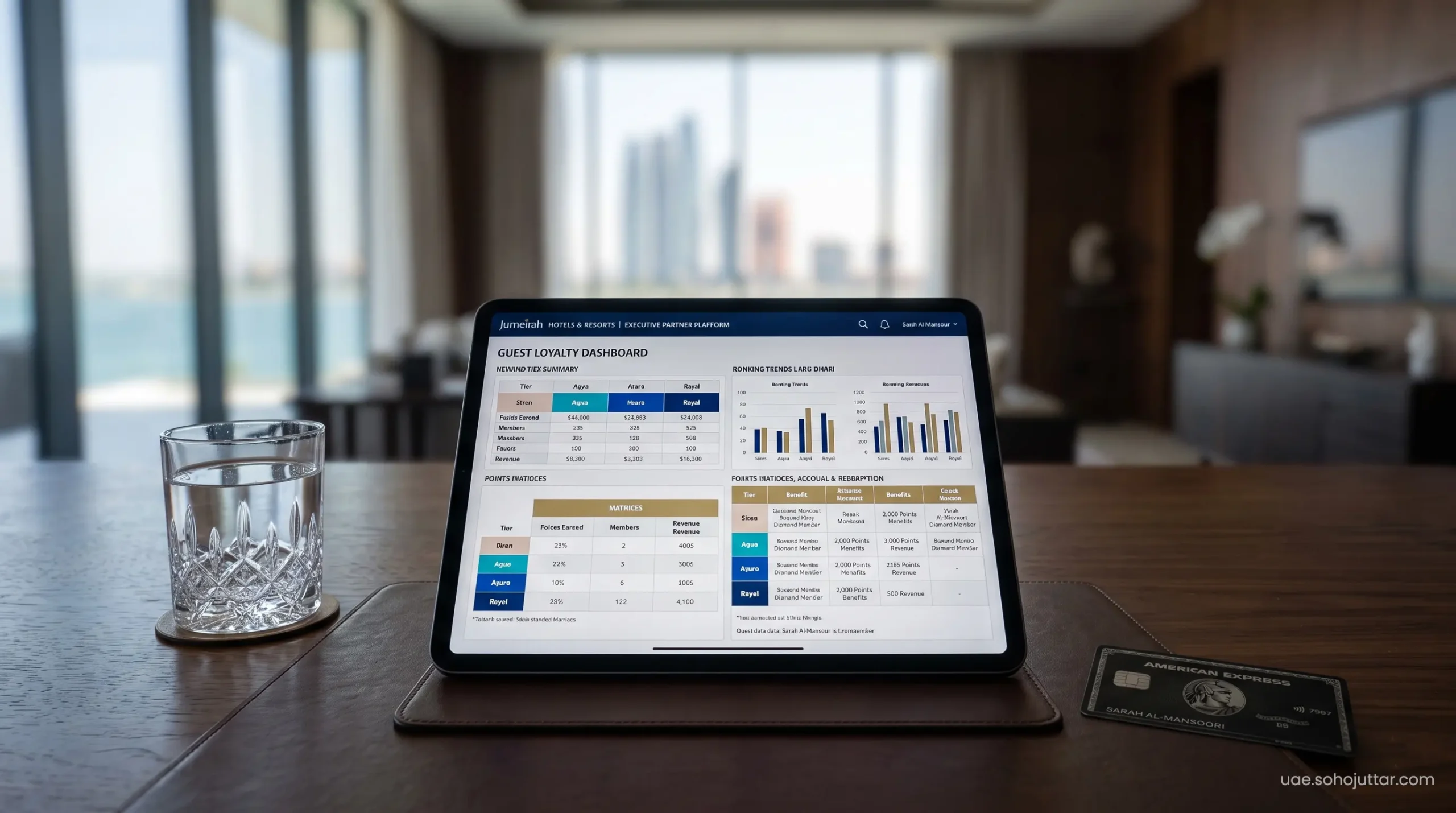
In this specific, highly competitive environment, direct elite loyalty programs become the dominant tactical asset. The battle for high-net-worth dominance in Dubai is fiercely contested between localized luxury giants and massive global mega-brands. Understanding the distinct algorithmic behaviors and upgrade matrices of these direct programs is critical for maintaining your elite status. The Jumeirah One program, for example, operates on a model of absolute localized exclusivity. It offers unparalleled, highly restricted access to global icons like the Burj Al Arab and the sprawling, canal-laced Madinat Jumeirah complex. Their internal algorithm heavily prioritizes high-spend culinary and spa activity over sheer room nights when calculating upgrade priority.
Conversely, the Hilton Honors program—specifically for members holding the elite Diamond tier—operates on sheer global volume. The Hilton algorithm is programmed to provide massive, guaranteed upgrades at ultra-luxury assets like the Waldorf Astoria Palm Jumeirah, provided the booking is made through their direct proprietary channels. Deciding exactly which ecosystem to deploy for your late September staycation requires a deep, comparative analysis of Jumeirah One and its global competitors, ensuring that your corporate travel portfolio is perfectly aligned with the hotel’s internal priority matrices as the lucrative autumn high season officially commences across the United Arab Emirates.
The 21-Day Algorithmic Panic Window
To truly master the UAE staycation market in 2026, one must understand the psychology of the dynamic pricing algorithm itself. Hotel revenue management software is entirely devoid of emotion; it calculates risk versus reward based strictly on historical data and current booking velocity. During the August-September period, the system operates on what industry insiders call the “21-Day Panic Window.”
If you query a room rate 60 or 90 days in advance for an August stay, the algorithm will present a stubbornly high retail rate. The software is programmed to wait, anticipating that international corporate accounts or early-bird tourists will absorb the inventory at full price. However, exactly 21 days prior to the target check-in date, if the suite inventory remains above a specific threshold (typically if the hotel is under 65% occupancy), the algorithm executes a rapid pivot. It realizes the international market will not materialize for that specific week, and it immediately dumps the premium inventory into the heavily discounted domestic OTA channels and B2B wholesale blocks.
For the elite staycationer, this means patience is literally currency. By holding your nerve and executing your booking through your preferred high-tier OTA profile at exactly the 14 to 21-day mark, you intercept the algorithm at its most vulnerable point. You secure the suite at the absolute floor price just moments before the local domestic market absorbs the dumped inventory. Combining this precise timing with your Genius Level 3 or Expedia VIP status creates an unbreakable compounding effect, resulting in luxury travel acquisitions that mathematically defy standard retail logic.
Elite FAQ: Aug-Sep 2026 OTA Algorithms & Staycations
1. Can I use a VPN to access GoZayaan’s localized UAE resident rates?
While a VPN will technically allow you to view the localized pricing algorithm, it is a catastrophic operational error for tourists. The hotel’s property management system legally requires a physical scan of a valid Emirates ID at check-in. Failure to provide this immediately reverts the reservation to the highest walk-in retail rate.
2. Do Expedia VIP Access properties guarantee early check-in during August?
No algorithmic status can absolutely guarantee early check-in, as it is strictly subject to physical room turnover. However, during the lower occupancy days of August, Expedia VIP profiles are pushed to the absolute top of the queue, making 10:00 AM suite allocations highly probable.
3. If I book through Agoda, will I earn Marriott Bonvoy points?
Structurally, reservations executed via third-party OTAs do not accrue direct loyalty points or elite night credits on the room rate. However, any incidental spend (such as signature dining, holistic spa therapies, or VIP cabana rentals) charged directly to your room folio during your stay will accrue points if you attach your Marriott Bonvoy profile at the front desk upon arrival.
4. Is it better to book August staycations 90 days out or last-minute?
For the late summer window, booking exactly 14 to 21 days in advance is mathematically optimal. Hotels hold prices artificially high early on, hoping for international bookings. At the 21-day mark, their dynamic revenue algorithms initiate a price drop on premium suites, releasing them to B2B and localized platforms to urgently stimulate domestic demand.
5. Does Booking.com Genius Level 3 waive the mandatory 10% hotel service charge?
Absolutely not. OTA loyalty discounts only apply to the core baseline accommodation rate. The 10% property service charge, the 7% Dubai municipality fee, and the 5% VAT are calculated sequentially on the final discounted amount and are strictly enforced by UAE law across all platforms.
